The Lost City of Petra is an ancient city carved into rose-colored cliffs in the Jordanian desert, and it is one of the most breathtaking places to visit on earth. By day, you hike past tombs and facades carved into the cliffs all around you. However, after sunset, a different side of this ancient city emerges with Petra by Night and a famous candlelit journey to the Treasury. Here’s how to experience this awe-inspiring city, both under the sun and beneath the stars.
What IS Petra?
Petra was established around 312 BC as a Nabataean capital city. Situated in southern Jordan, with a harsh desert climate, Petra had very advanced water engineering for its day. It also served as a major hub for merchants trading items such as spices and silk, and it became a thriving metropolis, drawing in people looking for wealth.
Eventually, trading routes changed, and a major earthquake caused damage to the water management system. The area fell into decline around the 7th-8th century A.D., and Petra was largely abandoned except for some remaining Bedouin tribes who continued to live in and around the caves for centuries.
However, in 1812, a Swiss explorer by the name of Johann Ludwig Burckhardt “rediscovered” this area and brought the Lost City of Petra back into the limelight again. Petra became a UNESCO World Heritage Site in 1985, and in 2007, Petra became recognized as one of the New 7 Wonders of the World.
What Is Petra Like During The Day?
During the day, with your entry ticket, you will have full access to ruins, tombs, monasteries, and trails. You’ll watch the colors shift and be awed by the transformation that takes place from one moment to the next, depending on the sun’s placement. This place is way bigger than most people realize. It can be physically demanding, but the payoff is exhilaratingly worth it! There are many sites to see, including these:
The Siq
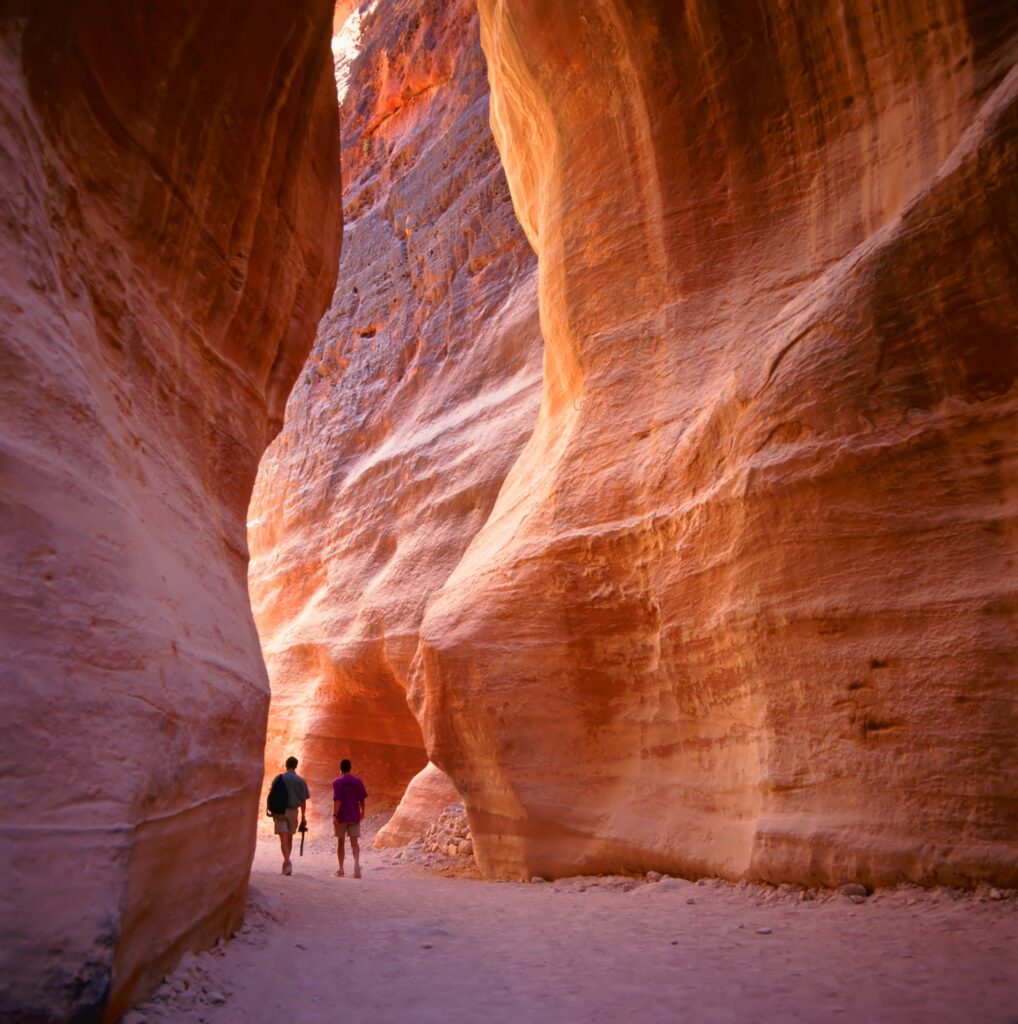
The Siq is where you will start. It is a narrow canyon entrance that is about 1.2 miles long, with towering rock walls containing ancient water channels carved into the stone. This area sets the drama for what is about to unfold.
The Treasury (Al-Khazneh)
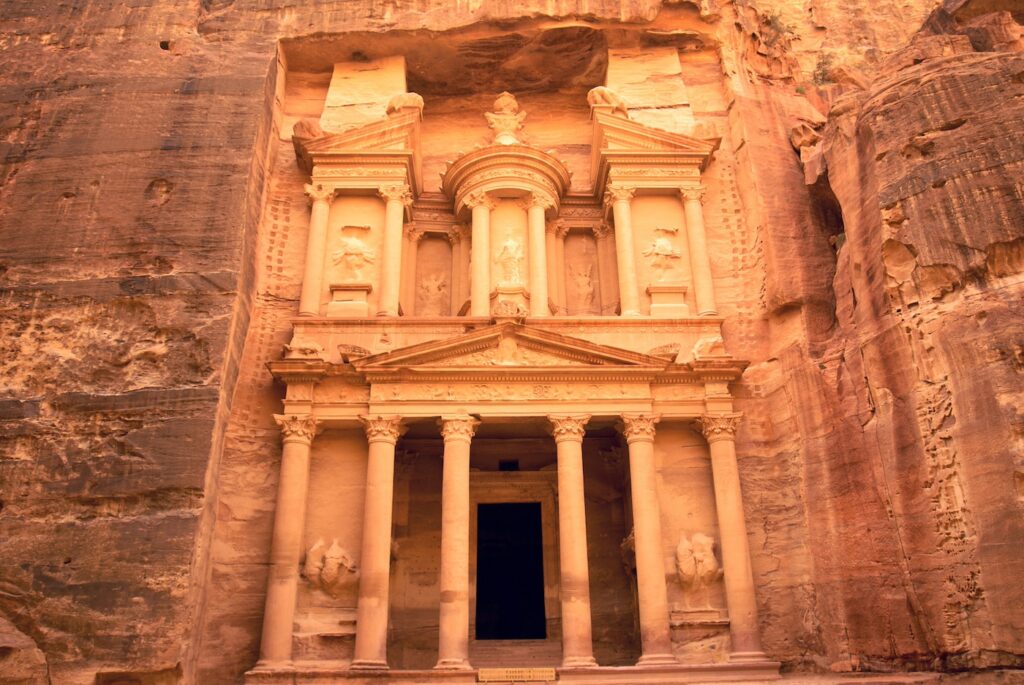
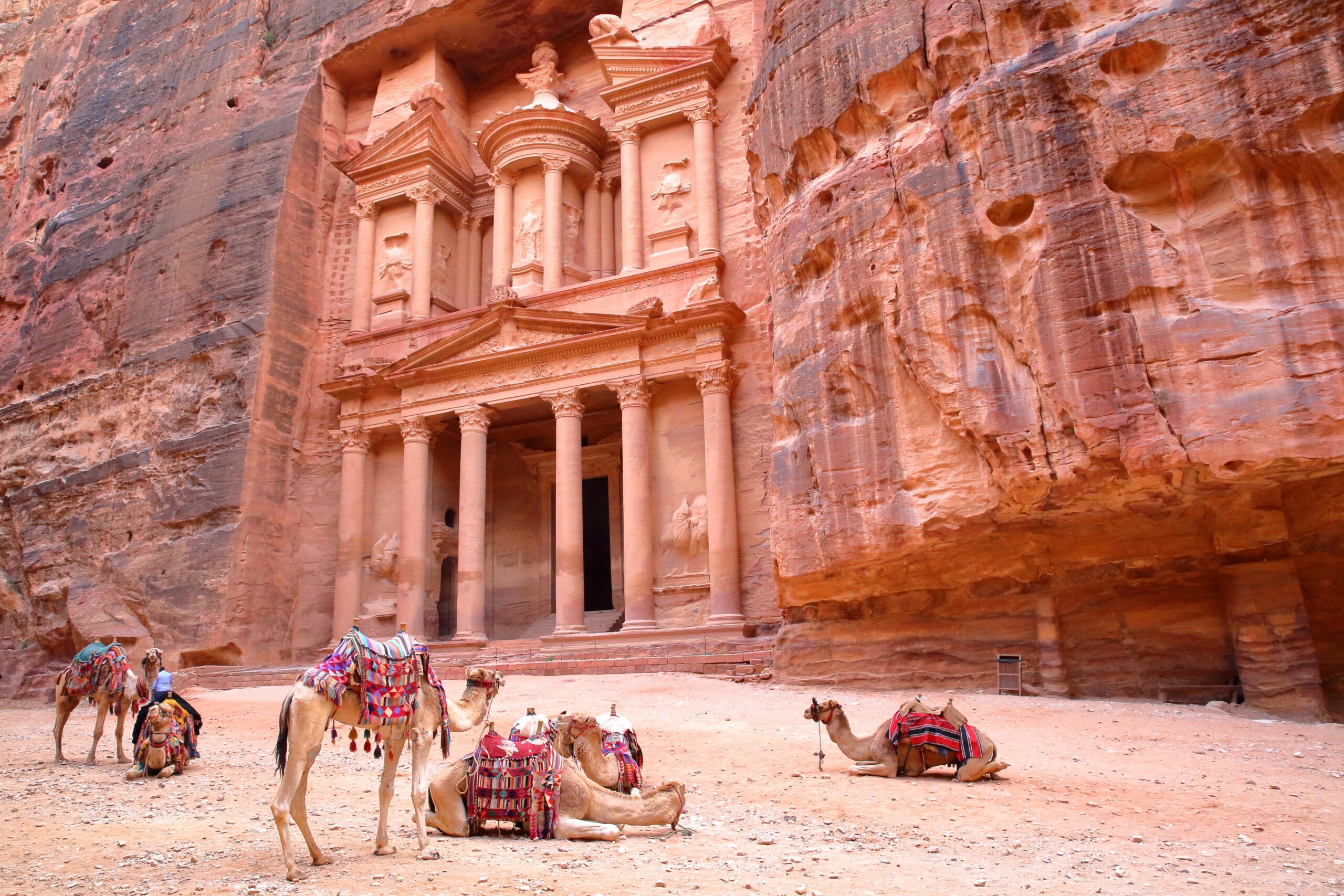
Stepping out of the narrow Siq, Petra’s most famous facade comes into view, the Treasury, carved directly out of rose-colored rock. Yes, this IS the postcard shot. And THIS is what everyone thinks of when they think of Petra. It truly is a magical moment and feels like you have just stepped onto a movie set, which is fitting since Indiana Jones and the Last Crusade filmed scenes here. And as you take it all in, there’s only one thought that comes to mind: “You Have Chosen… Wisely.” (You’re welcome, Indy fans!) Pro Tip: Get here early before tour groups pile in and enjoy the quietness of this place as the morning light hits the upper canyon walls. It’s gorgeous!
The Street of Facades
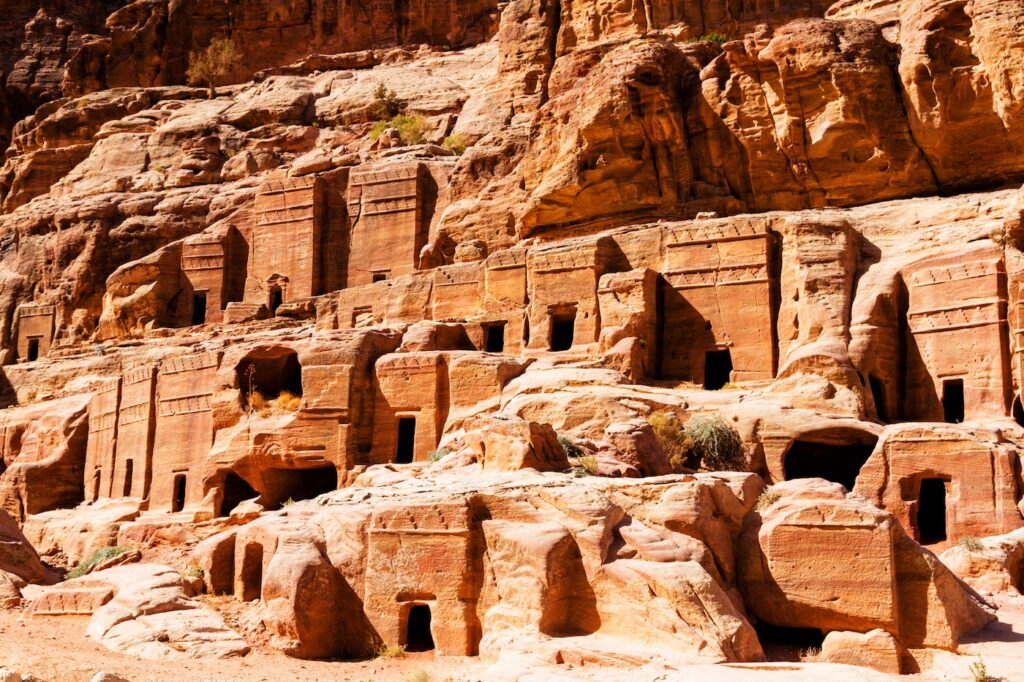
Following the Treasury area is The Street of Facades. This area has dozens of tombs carved directly into Petra’s cliffs and serves as the final resting place for elite Nabataean ancestors. Each facade is decorated, reflecting the inhabitants’ status and wealth. Walking through this area, you truly get an understanding of the cultural importance of honoring the dead.
The Royal Tombs
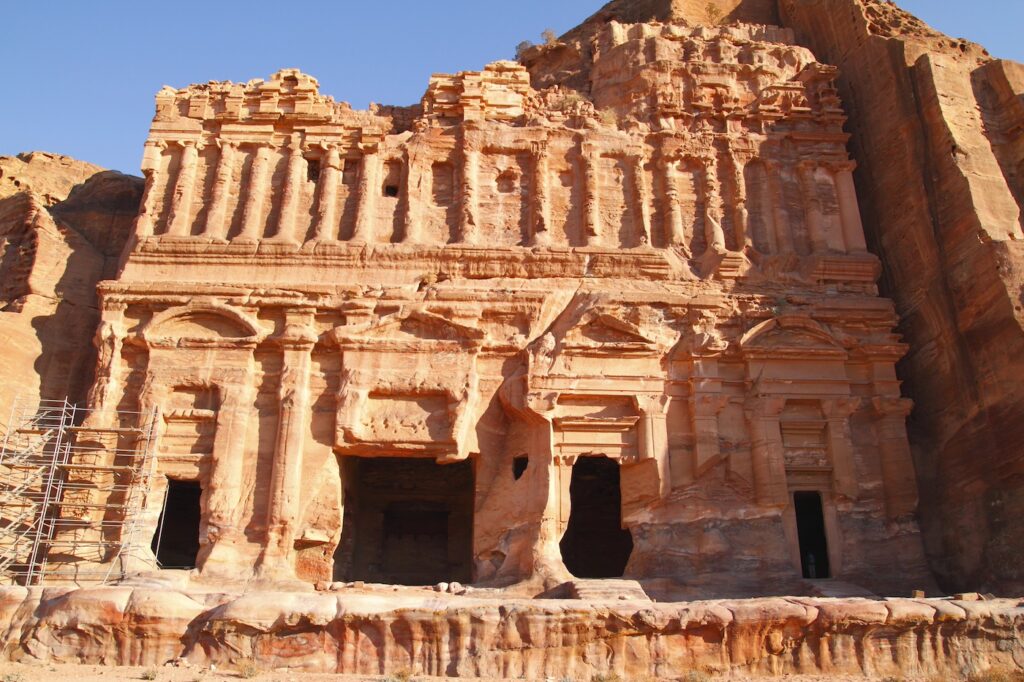
There are four royal tombs overlooking the center of the city, including the Urn, Silk, Corinthian, and Palace Tombs. These tombs are considered to be among the highest-ranking Nabataean elites, powerful families, or possibly even royalty. They have massive facades with grand staircases and columns that clearly are influenced by the Greeks and Romans. These impressive tombs are positioned to look over Petra’s main valley and can be seen from a distance, as though they are a statement of power.
The Roman Theater
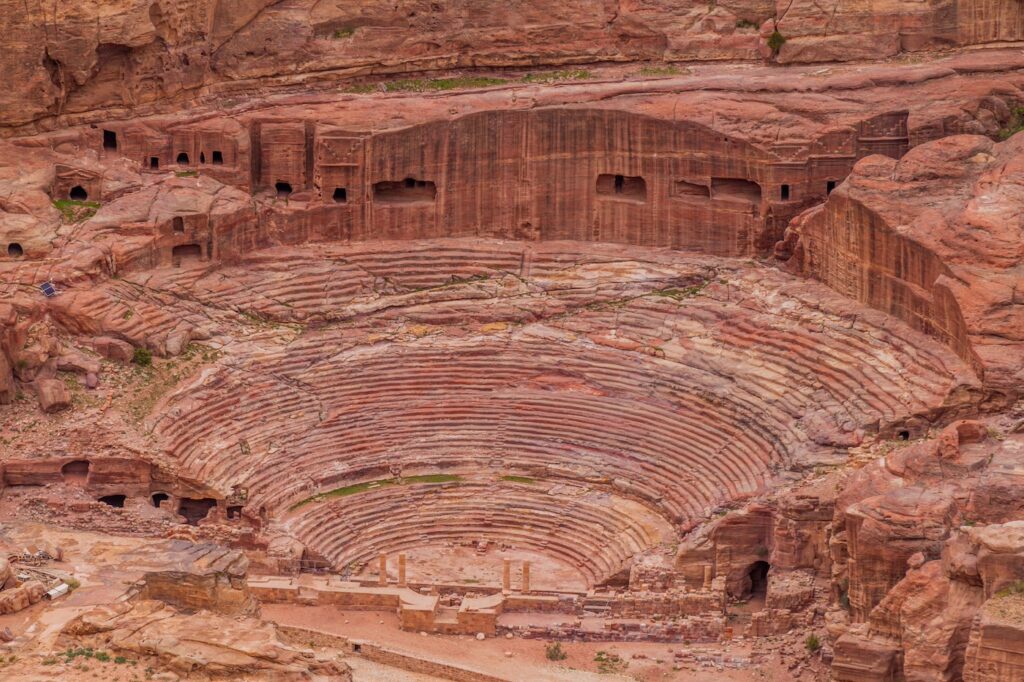
Contrary to its name, the Petra theater was not built by the Romans, but the architecture features typical Roman design. Built in the 1st century AD, it could hold up to 8,500 spectators. It was painstakingly carved from solid rock and was used to provide spectators with a view of the surrounding tombs while watching performances that took place there.
The Colonnaded Street & Great Temple Area
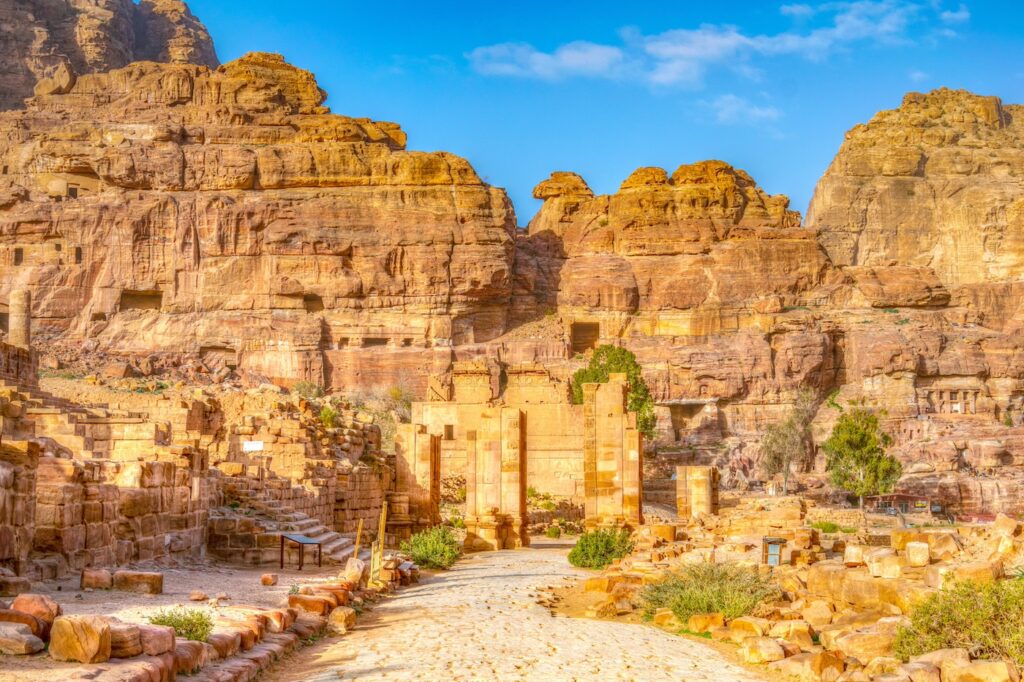
This is where Petra starts to feel like a true ancient city. Here, you will see the remains of shops, temples, and public buildings, which gives you a clearer picture of what daily life was probably like.
The Monastery (Ad Deir) DO NOT SKIP
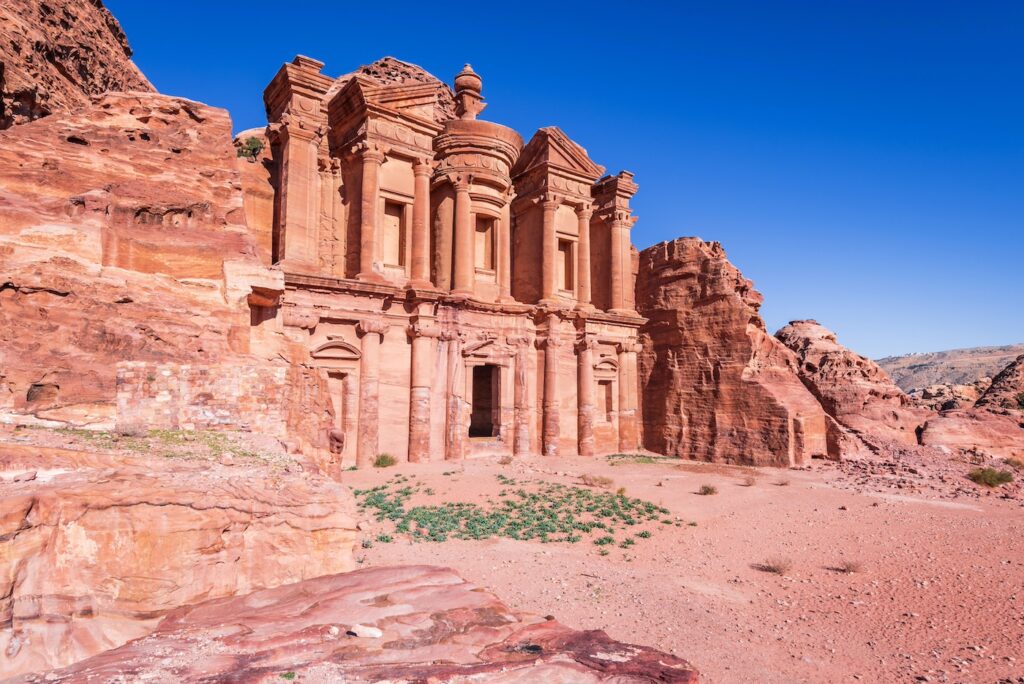
If you only have enough time to hike to one major viewpoint, it should be the Monastery. The catch? It is a hike of 800+ steps uphill. We will tell you that this is not for the faint-hearted. The steps are steep and uneven. The climb usually takes 45-90 minutes one way, depending on your fitness level, pace, and the HEAT!. However, once you make it to the top, you are rewarded with a huge payoff, The Monastery in all its glory perched on a plateau! This massive facade is 160 feet tall (50 meters), and it is carved directly into the rock. There are fantastic views of the Petra basin and mountains. Quite frankly, we think that this is more impressive and more memorable than the Treasury. Even better? There are fewer crowds due to the climb to get there.
Petra By Night
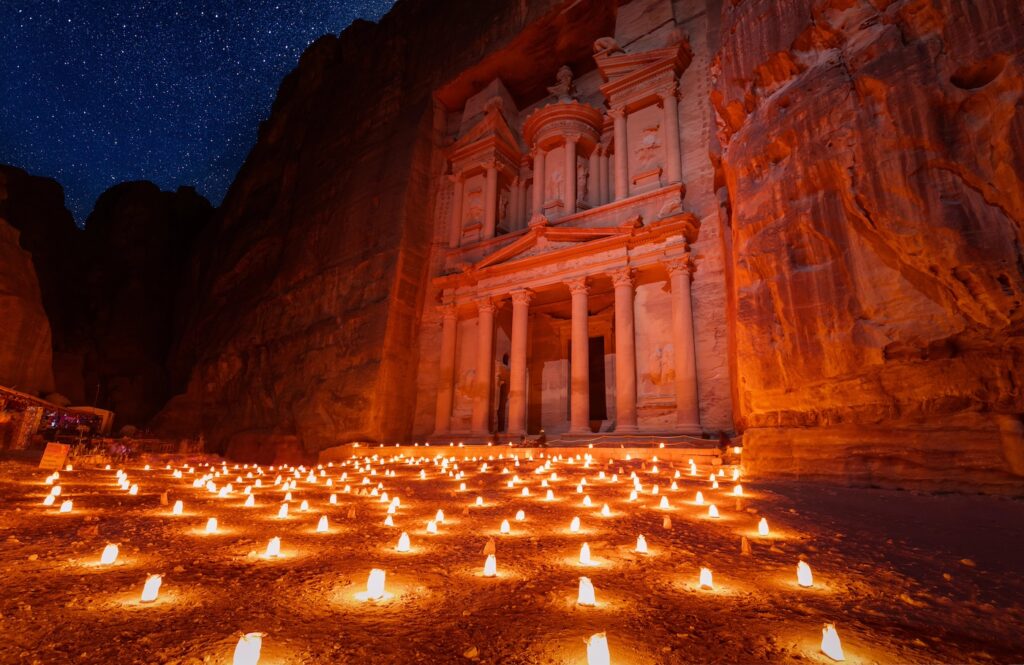
After putting in a full day or two of exploring the Lost City of Petra’s tombs and trails, it’s truly hard to believe that this city could feel even more dramatic. But once darkness falls and the desert cools off, Petra comes alive in a totally different way.
Petra by Night is a special experience that we absolutely love. It starts with a stunning, flickering candlelit walk through the Siq that is intentionally quiet and moody. When the Treasury finally comes into view, nearly 2,000 candles ignite the canyon in a soft, dreamy glow. After taking a seat in front of the Treasury, traditional Bedouin music begins, adding to the atmosphere. As of May 2025, Petra by Night started an enhanced program featuring a light and projection show on the Treasury’s facade. Through projection-mapped storytelling, Petra’s history comes alive. This is not some boring lecture. It’s more of a cultural experience with lots of ambiance.
What to Know About Petra Before You Go
- This is the desert: Bring plenty of water, sun protection, a hat, and sunglasses.
- What to wear: Men and women should choose breathable fabrics and dress modestly out of respect for the culture. Refrain from wearing spaghetti straps or low-cut tops and short shorts. Covering knees and shoulders is recommended. For Petra by Night, we highly recommend layering with a warm sweater or jacket. If it’s during a colder time of year, bring a puffer jacket and warm socks.
- Wear good shoes: Bring sneakers/trainers or hiking shoes with a decent grip.
- Plan plenty of time: If you truly want to take in a good portion of the sights, we recommend two days. And if you really want to hike the many trails, three days would give you the extra time to do so.
- Vendors: There are many vendors, and they can be persistent. Uninterested? Give them a firm “no, thank you.” If you ARE interested in what they are selling, you will need cash. Haggling is expected. Start at 30 to 50% off the first price they offer and go from there.
- Skip the rides unless necessary: Locals here offer donkey rides up and down the steps to the Monastery. It’s a little controversial, with many people saying that they did not feel safe doing this. In addition, animal welfare advocates advise against riding donkeys unless you have limited mobility. These animals are often overworked and undercared for.
When to Visit
The most ideal times to go are March through May and September through November, with April being the busiest. These months have comfortable daytime temperatures with longer daylight hours, making it easier to hike to the Monastery. While June through August is less busy, it’s also the hottest, with temperatures hovering between 95 and 105 degrees Fahrenheit.
Regardless of what season you choose to visit, we highly recommend getting to Petra as early in the day as possible, right at the opening. This is the best way to avoid the crowds and to get the best lighting.
Hours
Petra works on two seasons, summer (March through October) and winter (November through February).
Summer: 6:00 a.m. – 7:00 p.m.
Winter: 6:00 a.m. – 5:00 p.m.
*Hours can fluctuate slightly by season, so be sure to check with the Visitor Center.
Tickets and Costs for Visiting Petra
How to Buy
You can now purchase entry tickets to Petra at the Visitor Center in Wadi Musa or online in advance through the official Petra Pass system. Online tickets will be issued in your name and are non-transferable.
Daytime Ticket Prices (2026)
- 1-day ticket: 50 JOD ($70 USD)
- 2-day ticket: 55 JOD ($77 USD)
- 3-day ticket: 60 JOD ($84 USD)
(Discounts often apply for children.)
Pro Tip: If you are planning on going to multiple sites in Jordan other than Petra, buying a Jordan Pass is well worth it. It includes entry to over 40 tourist sites in Jordan, including entrance to Petra (for a daytime ticket only). It also includes a waiver of the visa fee for most nationalities to enter Jordan.
Petra by Night Tickets
Petra by Night runs Sunday through Thursday, from 8:30-10:30 p.m. It requires a separate ticket AND proof that you visited Petra during the day, so you need to show your daytime Petra tickets or a Jordan Pass. You will then need to purchase a separate Petra by Night ticket in person at the Visitor Center on the evening of the event. We recommend bringing cash and getting there 15 minutes early for ticket check-in and a short orientation before walking through the Siq.
As of this 2026, Petra by Night tickets are currently 30 JOD ($42 USD)
Petra is one of those places that lives in your imagination before you visit, but becomes an unforgettable memory after you’ve been there. Whether you visit this lost city by day or go to the enchanting Petra by Night experience, we’re sure that this ancient Wonder of the World will stay with you forever.